This conversation was generated with Duck.ai (https://duck.ai) using Google's Gemma 4 31B Model. AI chats may display inaccurate or offensive information (see https://duckduckgo.com/duckai/privacy-terms for more info).
====================
User prompt 1 of 4 - 8/28/2026, 2:20:31 PM: Write a 500 word essay about this image and two poems in the text. [Attached image 1]
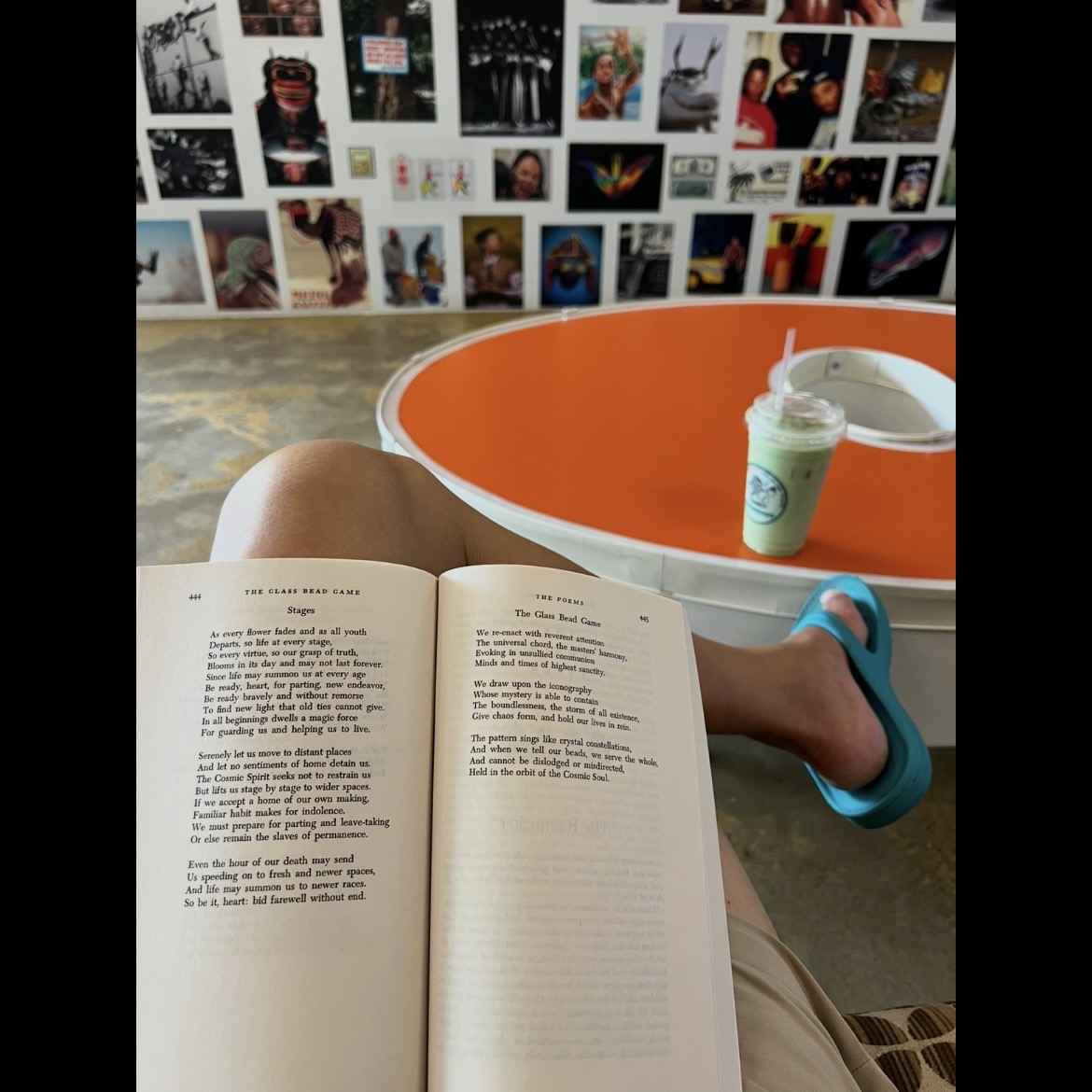
Gemma 4 31B: The provided image captures a quiet, contemporary intersection of leisure and intellectual exploration. The perspective is intimate and first-person, placing the viewer in the position of the reader. At the center of the composition is an open book, its pages filled with poetry, resting against the reader's lap. This central focus suggests a moment of intentional stillness, a sanctuary of reflection carved out of a modern, vibrant environment.
The setting contrasts the classical act of reading a physical book with a highly stylized, artistic backdrop. In the distance, a wall is densely plastered with eclectic photographs and artworks, ranging from candid portraits to surrealist imagery. This gallery-like atmosphere implies that the reader is likely in a creative space, such as a cafe or a modern art gallery, where the surrounding visual noise serves as a counterpoint to the internal silence of poetry. The presence of a bright orange table and a pale green iced drink adds a pop of saturated color, grounding the scene in the casual, sensory comforts of the present moment.
The two poems visible in the text act as the emotional core of the image. While the typography is small, the structure of the verses suggests a contemplative, perhaps melancholic tone. The left page contains a longer, narrative-driven poem that explores memory and the passage of time, using descriptive language to evoke a sense of longing. The right page features a shorter, more fragmented piece that feels like an internal monologue or a series of sudden realizations. Together, these poems transform the image from a simple snapshot of a day out into a study of the "flâneur"—the urban observer who wanders through the modern world while remaining deeply immersed in their own private, intellectual landscape.
There is a poignant tension in the image between the ephemeral and the enduring. The iced drink will melt, the flip-flops suggest a transient summer afternoon, and the digital-age art on the walls is designed for quick consumption. In contrast, the printed word in the book represents a slower, more permanent form of engagement. The act of reading poetry requires a surrender of time that stands in opposition to the fast-paced nature of the environment.
Ultimately, the image is a celebration of mindfulness. It depicts the ability to be physically present in a loud, colorful, and stimulating world while remaining mentally anchored in the quiet depths of literature. By juxtaposing the vivid orange of the table and the chaotic collage of the wall with the cream-colored pages of a book, the photograph highlights the necessity of solitude and art in the modern experience. It suggests that the most profound journeys are often those taken while sitting perfectly still.
User prompt 2 of 4 - 8/28/2026, 2:22:01 PM:
[Attached image 1][Attached image 2]
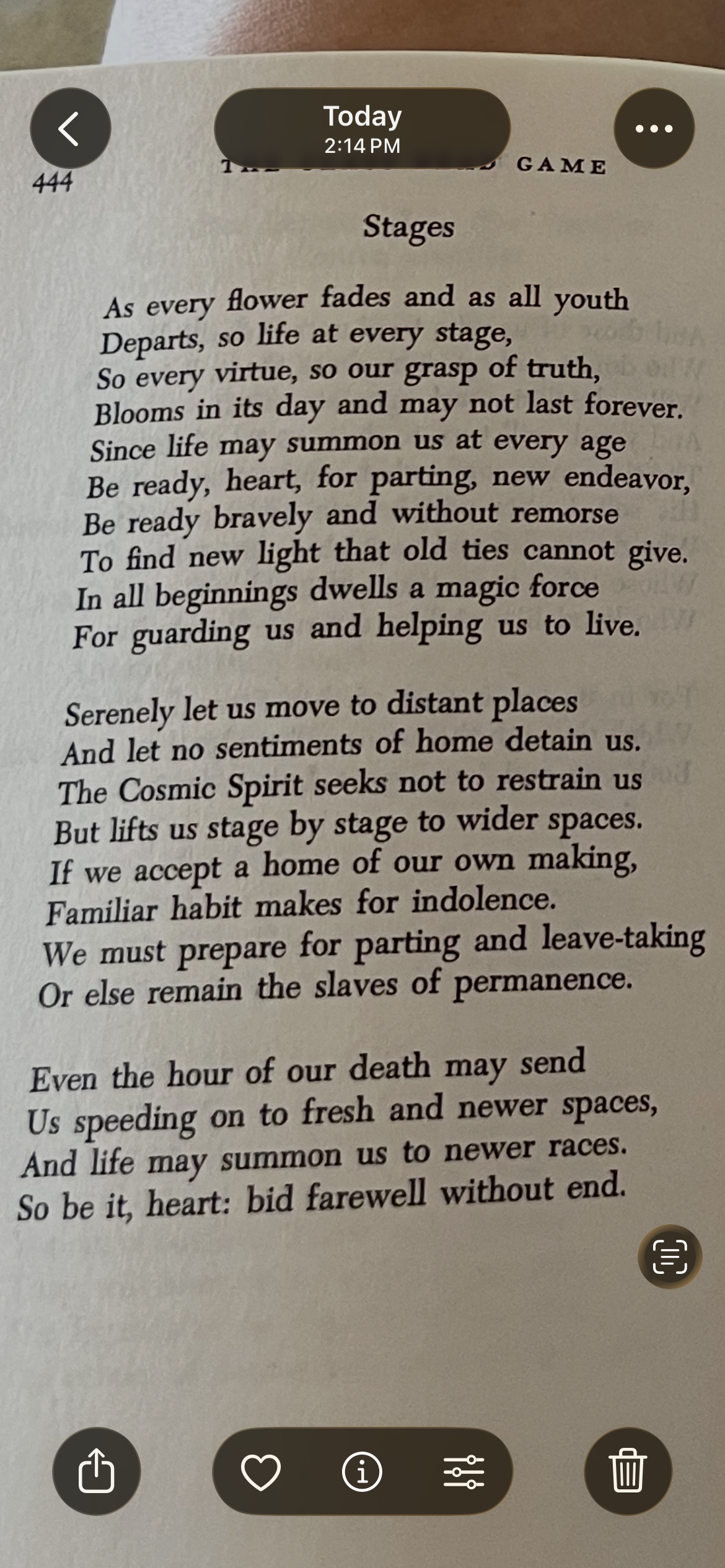
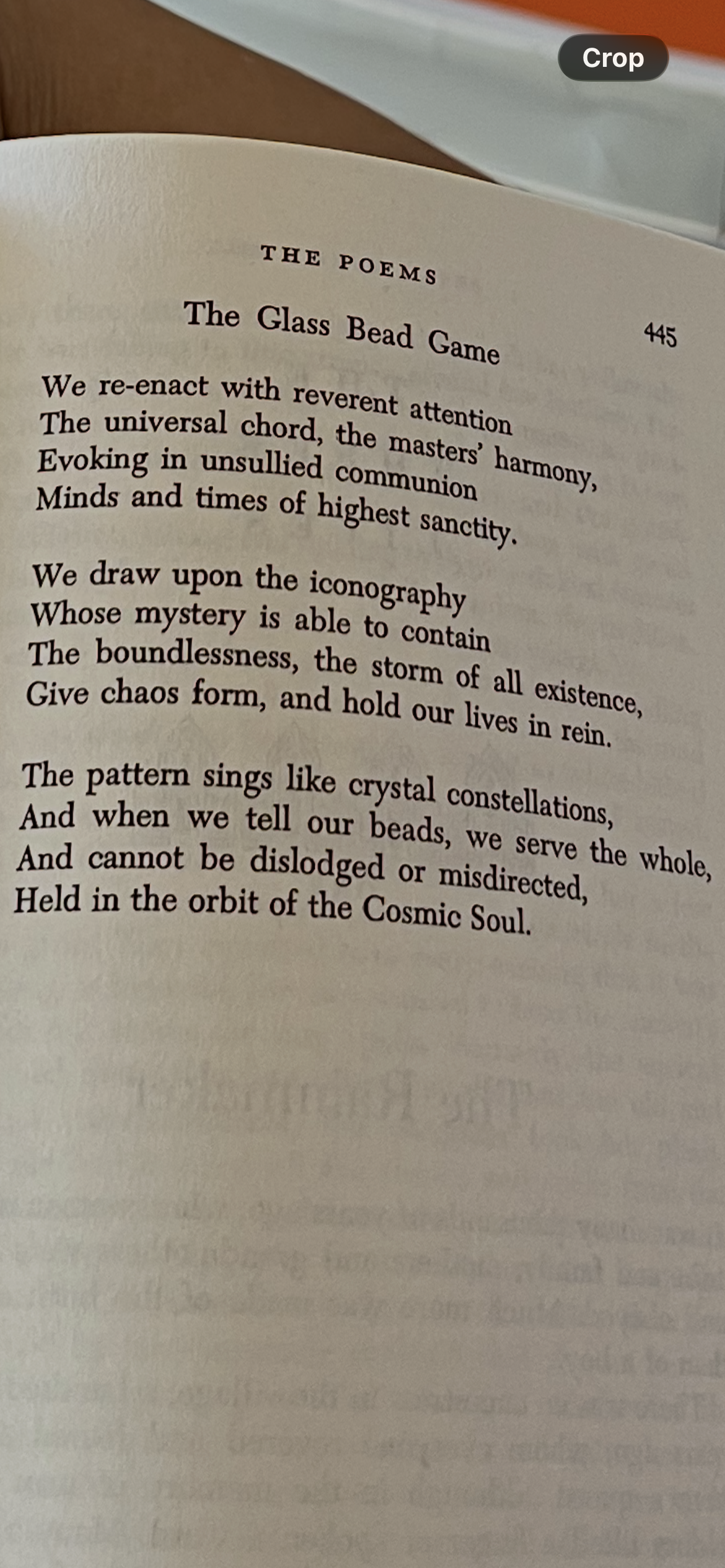
Gemma 4 31B: The images reveal two distinct poems that explore the relationship between the individual and the vast, unfolding nature of existence. Through these texts, the theme of the overall scene shifts from simple leisure to a profound meditation on transition and cosmic order.
The first poem, titled "Stages," is a reflection on the necessity of change. It begins with a natural metaphor, noting that just as flowers fade and youth departs, life moves through inevitable stages. The poet argues that virtues and truths are not static but bloom and fade in their own time. The core message is a call to bravery; the reader is urged to be "ready, heart, for parting, new endeavor" and to move forward "without remorse." By framing the "Cosmic Spirit" as a force that pushes us toward "wider spaces," the poem suggests that clinging to the familiar—the "home of our own making"—leads to indolence and a spiritual stagnation termed the "slaves of permanence." It concludes with a fearless view of death, seeing it not as an end, but as a final transition to "fresh and newer spaces."
The second poem, "The Glass Bead Game," shifts from the movement of the individual to the harmony of the universe. The title alludes to a complex intellectual pursuit of synthesizing all human knowledge, and the poem reflects this by speaking of a "universal chord" and "masters' harmony." While "Stages" focuses on the act of leaving, "The Glass Bead Game" focuses on the act of alignment. It describes a process of evoking "highest sanctity" through iconography that can contain the "storm of all existence" and give "chaos form." The imagery of "crystal constellations" and "telling our beads" suggests a meditative, rhythmic connection to a larger whole, ultimately placing the human experience within the "orbit of the Cosmic Soul."
Together, these poems create a dialogue between the need for detachment and the desire for connection. "Stages" teaches the reader how to let go, while "The Glass Bead Game" teaches the reader how to belong to something eternal. In the context of the original image—a person reading in a vibrant, modern space—these poems suggest that the reader is seeking a bridge between their immediate, sensory world and these timeless, metaphysical truths. The act of reading becomes a "glass bead game" in itself: an attempt to find a pattern and a purpose amidst the colorful chaos of modern life.
User prompt 3 of 4 - 8/28/2026, 2:24:03 PM: Who wrote them?
Gemma 4 31B: Both poems were written by the German-Swiss author Hermann Hesse.
They are part of a collection of poetry attributed to the character Joseph Knecht in Hesse's final novel, The Glass Bead Game (originally published in German as Das Glasperlenspiel). The poems serve as thematic echoes of the novel's exploration of synthesis, spiritual growth, and the cyclical nature of existence.
User prompt 4 of 4 - 8/28/2026, 2:25:10 PM: Update the essay.
Gemma 4 31B: The provided image captures a quiet, contemporary intersection of leisure and intellectual exploration. The perspective is intimate and first-person, placing the viewer in the position of the reader. At the center of the composition is an open book, its pages filled with the poetry of Hermann Hesse, resting against the reader's lap. This central focus suggests a moment of intentional stillness, a sanctuary of reflection carved out of a modern, vibrant environment.
The setting contrasts the classical act of reading a physical book with a highly stylized, artistic backdrop. In the distance, a wall is densely plastered with eclectic photographs and artworks, ranging from candid portraits to surrealist imagery. This gallery-like atmosphere implies that the reader is likely in a creative space, such as a cafe or a modern art gallery, where the surrounding visual noise serves as a counterpoint to the internal silence of the text. The presence of a bright orange table and a pale green iced drink adds a pop of saturated color, grounding the scene in the casual, sensory comforts of the present moment.
The two poems visible—"Stages" and "The Glass Bead Game"—act as the emotional core of the image. "Stages" is a meditation on the necessity of transition, urging the reader to embrace the "Cosmic Spirit" and move toward "wider spaces" rather than becoming "slaves of permanence." It frames life as a series of inevitable partings and new endeavors. In contrast, "The Glass Bead Game" seeks a higher synthesis, describing a "universal chord" and "masters' harmony" that gives "chaos form." Together, these poems create a dialogue between the need for detachment and the desire for cosmic alignment, reflecting the philosophical themes of Hesse's final novel.
There is a poignant tension in the image between the ephemeral and the enduring. The iced drink will melt, the flip-flops suggest a transient summer afternoon, and the digital-age art on the walls is designed for quick consumption. In contrast, the printed word represents a slower, more permanent form of engagement. The act of reading Hesse requires a surrender of time that stands in opposition to the fast-paced nature of the environment.
Ultimately, the image is a celebration of mindfulness. It depicts the ability to be physically present in a loud, colorful, and stimulating world while remaining mentally anchored in deep philosophical inquiry. By juxtaposing the vivid orange of the table and the chaotic collage of the wall with the cream-colored pages of the book, the photograph highlights the necessity of solitude and art in the modern experience. It suggests that the most profound journeys are those taken while sitting perfectly still, synthesizing the chaos of the outer world into the harmony of the inner soul.