🍌
This conversation was generated with Duck.ai (https://duck.ai) using Google's Gemma 4 31B Model. AI chats may display inaccurate or offensive information (see https://duckduckgo.com/duckai/privacy-terms for more info).
====================
User prompt 1 of 4 - 9/4/2026, 8:39:59 AM: Finished The Glass Bead Game, starting with a new book. [Attached image 1]
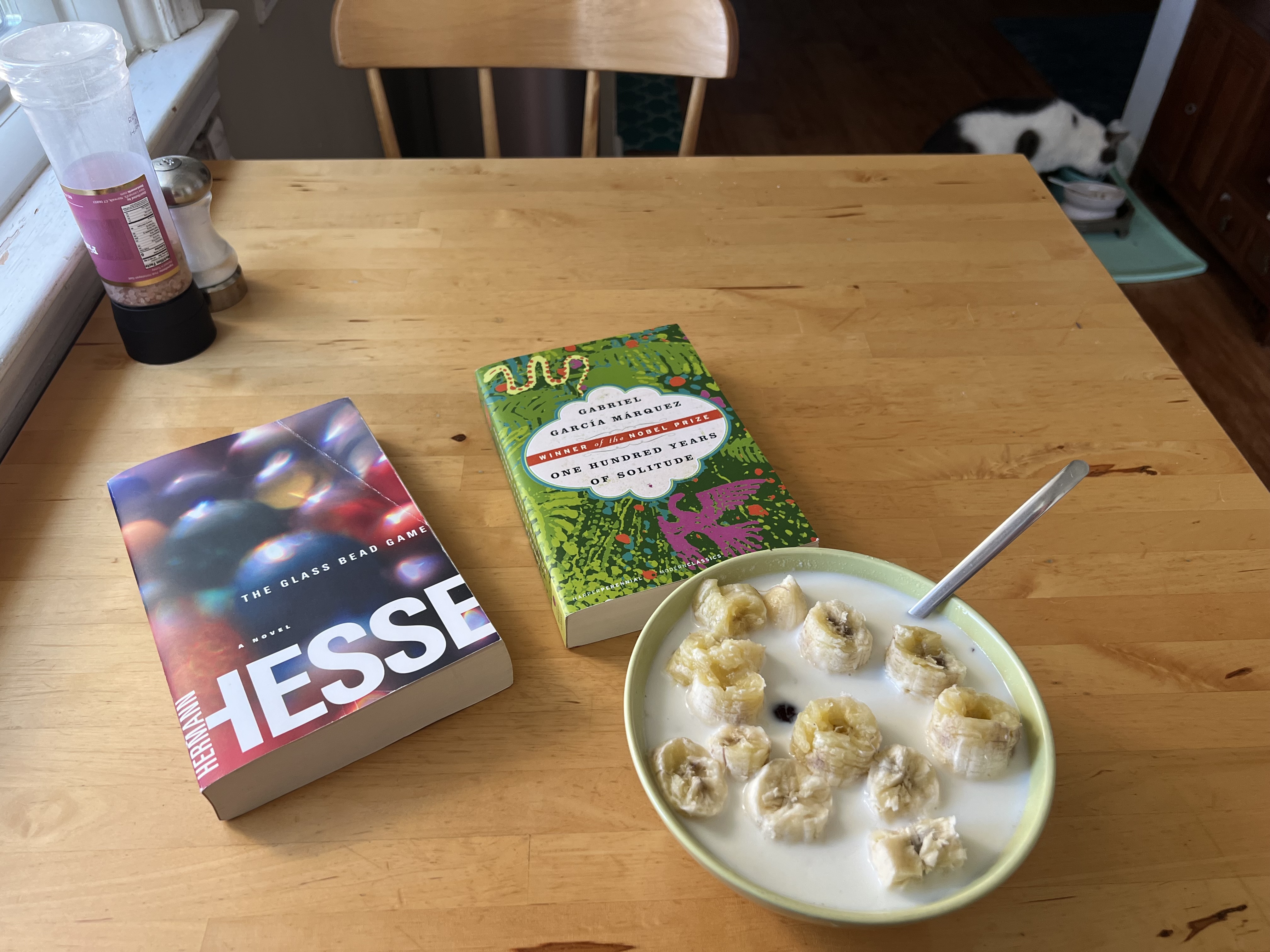
Gemma 4 31B: That looks like a great transition. You are moving from the intellectual depth of Hermann Hesse to a colorful new read, all while enjoying a bowl of sliced bananas. Enjoy the new book!
User prompt 2 of 4 - 9/4/2026, 8:40:34 AM: Make a connection between them.
Gemma 4 31B: While they differ wildly in tone and form, both books explore the idea of a structured system used to make sense of the world. In The Glass Bead Game, the "game" is a highly disciplined, academic synthesis of all human knowledge, music, and mathematics, representing a pursuit of intellectual perfection.
The book you are starting appears to be a guide or a creative exploration of color and design. Just as the Glass Bead Game uses a symbolic language to connect disparate fields of study, a study of color uses a system (the color wheel, color theory, and harmony) to categorize and connect visual experiences. Both works are essentially about finding a universal language—one through the lens of abstract intellectualism and the other through the lens of visual aesthetics.
User prompt 3 of 4 - 9/4/2026, 8:41:13 AM:
[Attached image 1]
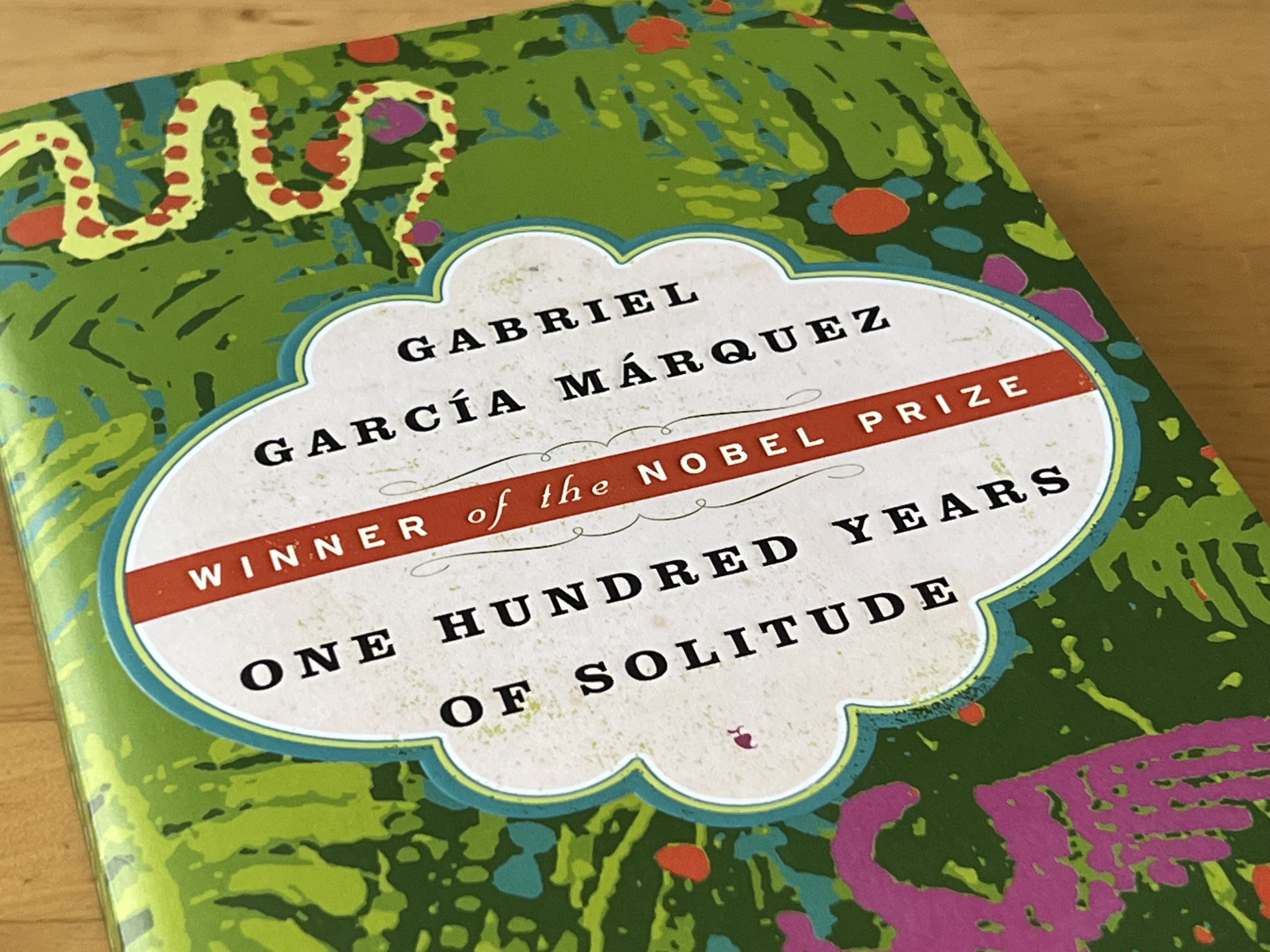
Gemma 4 31B: Since you are moving from The Glass Bead Game to One Hundred Years of Solitude, the strongest connection between them is their preoccupation with the cyclical nature of time and the isolation of the intellectual or ancestral spirit.
In Hesse's novel, the inhabitants of Castalia live in a preserved, timeless bubble, attempting to transcend the messy flow of history through their game. Similarly, the Buendía family in Macondo exists in a world where time seems to loop, with names, personalities, and mistakes repeating across generations. Both books examine the tragedy of "solitude"—whether it is the scholarly solitude of the Magister Ludi or the ancestral solitude of the Buendías—and the struggle to find genuine human connection within a rigid or predetermined system.
User prompt 4 of 4 - 9/4/2026, 8:41:48 AM: 🍌
Gemma 4 31B: The banana in your bowl is actually a perfect bridge to One Hundred Years of Solitude.
One of the most pivotal and devastating arcs in the novel is the "banana company" era in Macondo. The arrival of the American banana plantation brings a period of artificial prosperity and modernization, which ultimately leads to exploitation, a brutal massacre of workers, and the eventual decay of the town. Your snack is a literal piece of the economic and political catalyst that drives the story toward its tragic conclusion.