Strand
This conversation was generated with Duck.ai (https://duck.ai) using Google's Gemma 4 31B Model. AI chats may display inaccurate or offensive information (see https://duckduckgo.com/duckai/privacy-terms for more info).
====================
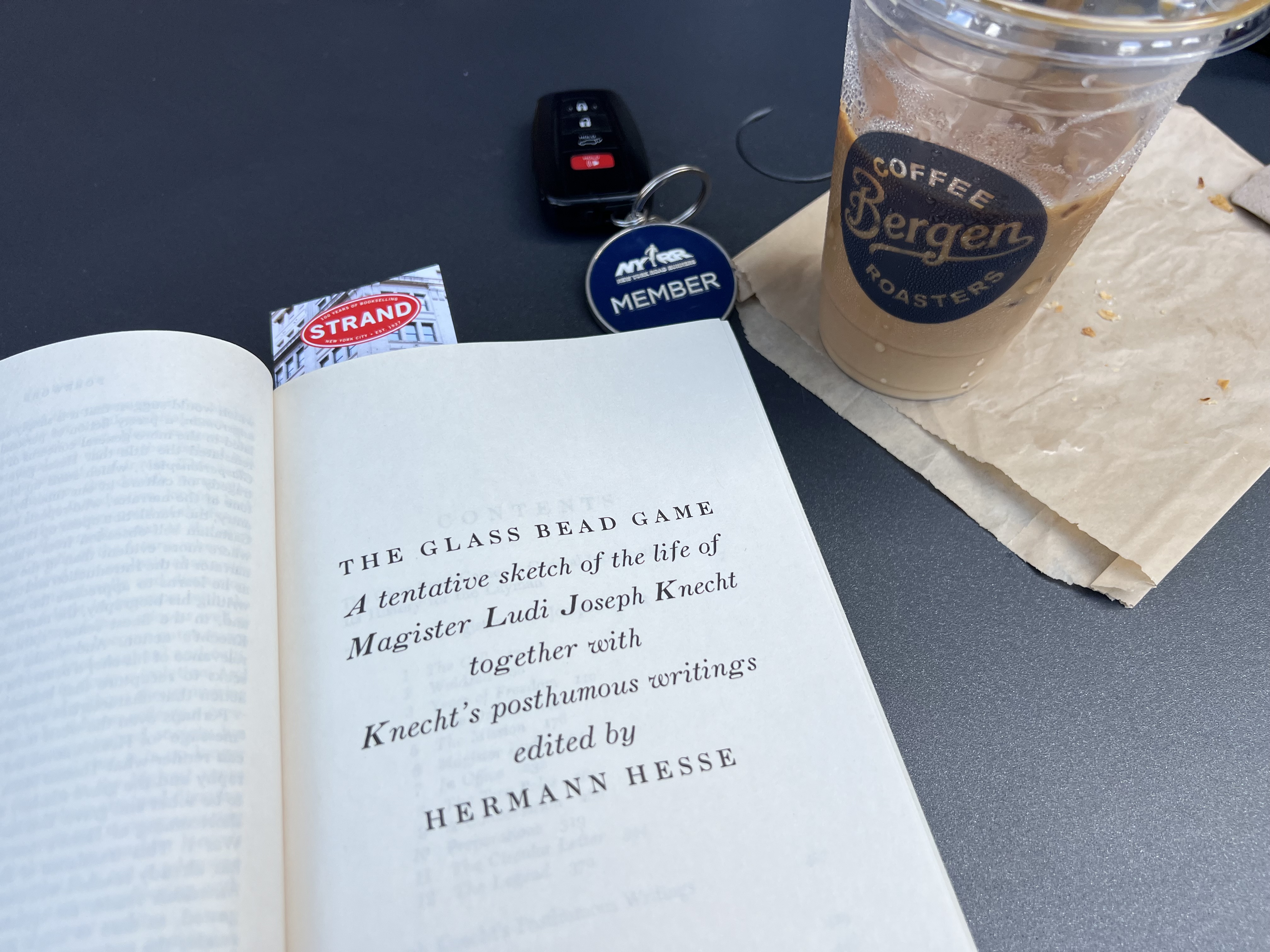
User prompt 1 of 1 - 9/6/2026, 3:59:05 PM: The caffeine had long since lost its chill, the ice having melted into a watery, pale residue against the plastic walls of the cup, but Elias didn't notice. He remained anchored to the small cafe table, his thumb tracing the edge of a page in The Glass Bead Game. Beside the book, his car keys and a blue membership token sat like discarded relics of a life he no longer felt a part of—the mundane requirements of a city that demanded punctuality and presence. He had come to the coffee shop to disappear into the intellectual labyrinth of Hesse's prose, seeking a sanctuary where the noise of the street outside was muted by the weight of a story about a world dedicated entirely to the pursuit of synthesis and art.
As he stared at the red and white bookmark, the vibrant crimson seemed to bleed into a memory of a different New York, one that existed thirty years prior. He could almost smell the intoxicating, dusty scent of a million aging pages and the metallic tang of the city air drifting in through the open doors of the Strand. Back then, the bookstore wasn't just a shop; it was a sprawling, chaotic cathedral of ink and paper where he had spent entire Saturdays getting lost in the narrow aisles of the rare book room. He remembered the feeling of his oversized corduroy jacket brushing against stacks of poetry and philosophy that reached toward the ceiling, and the quiet, knowing nods shared with strangers who were all searching for the same elusive truth hidden in a leather-bound spine. In that version of the city, the world felt infinitely larger and more mysterious, and the act of finding a book felt less like a purchase and more like a discovery.
The memory shifted, sharpening until he could see a specific afternoon in the autumn of 1996. He looked down at his current drink, the condensation from the iced coffee pooling on the table, a stark contrast to the warm, humid haze of those New York afternoons. He recalled the way the pale sunlight had filtered through the grime of the storefront windows, illuminating dancing motes of dust above a table of discounted paperbacks. It was there, tucked between a weathered volume of Kierkegaard and a nameless journal of essays, that he had first encountered a used copy of the very book he now held.
He remembered the woman who had been standing beside him—a graduate student with ink-stained fingers and a look of profound intensity—who had noticed him eyeing the text and whispered, "It's a dangerous book to read if you're looking for easy answers." They had spoken for an hour in the cramped alleyway of the store, two ghosts in a city of millions, bonded by a shared hunger for a world that valued the mind over the machine. Now, three decades later, as he took a slow sip of the watered-down coffee, the bookmark remained the only physical bridge left to that conversation and the version of himself that had believed a book could actually change the trajectory of a life.
Continue [Attached image 1]
Gemma 4 31B: A sudden, sharp blast from the cafe's door signaled a new arrival, the rush of humid city air momentarily breaking the spell. Elias blinked, the dusty aisles of the 1990s receding to reveal the sterile, polished surface of the modern table and the blurred movement of people in slim-fit suits glancing at their watches. The woman from the Strand had long since vanished into the currents of time—perhaps she had found her answers, or perhaps she had succumbed to the same gravitational pull of the mundane that now tugged at him.
He looked back at the page, at the intricate descriptions of Castalia's scholarly isolation. The book spoke of a life lived in the service of a great, unifying game, a pursuit of pure intellect that transcended the petty frictions of the material world. He wondered if that was why he had clung to this specific copy for thirty years. It wasn't just the prose; it was the residue of that afternoon, the ghost of a connection that had promised a different kind of existence. He had spent three decades trying to build a life that mirrored that intellectual purity, only to find himself anchored to a plastic cup and a membership token for a gym he rarely visited.
He reached out and touched the blue token, the cold metal feeling alien against his skin. It represented the "presence" the city demanded—the physical maintenance of a body that served as a vessel for a career in corporate law, a profession that required him to synthesize facts not for art, but for victory. He had become a master of a different kind of game, one played with billable hours and strategic precedents, far removed from the spiritual synthesis Hesse had envisioned.
Slowly, Elias closed the book. The thud of the pages meeting was soft, but it felt final. He didn't stand up immediately; instead, he watched a single drop of condensation slide down the side of the cup, carving a clear path through the frosted plastic. He realized that the bookmark wasn't a bridge to the past, but a marker of where he had stopped growing. The danger the graduate student had warned him about wasn't in the book's complexity, but in the temptation to retreat into a world of ideas to avoid the messy, heartbreaking work of actually living.
He gathered his keys and the token, leaving the watered-down coffee behind. As he stepped out into the roar of the New York street, the noise no longer felt like a distraction to be muted, but a chaotic, living symphony. He didn't know where the woman was or if she ever remembered the man in the corduroy jacket, but as he merged into the crowd, he felt a strange, flickering hope that the trajectory of a life could still be changed, even after the ice had melted.